The washing machine did not come.
We had spent the better part of a morning waiting on it. Our old one had died in the kitchen a few days earlier, flooding the floor mid-cycle, and our handyman had already pronounced it unfixable. Our landlord had moved fast to get a replacement ordered, even while managing the whole thing from his own vacation. Delivery was set for that day. It never showed.
We noticed it everywhere else that morning too, shops we’d expected to be open sitting shuttered instead. It was only once we sat down and googled it that the reason surfaced. It wasn’t a logistics failure, a lost package, a driver who’d run out of hours. August 6th was a local holiday in Alcalá de Henares, one of two the city sets for itself each year, and everyone who lives here already knew that. It felt like we were the only people in town who didn’t, and delivery drivers, apparently, were among the many who’d simply had the day off marked on a calendar we hadn’t thought to check.
What surprised me more than the closure itself was learning how it had come to exist. Spain’s calendar runs on three layers: national holidays observed, more or less, everywhere in the country, a second set fixed by each autonomous community, and, underneath both, two more days that belong to the town itself, chosen by the ayuntamiento, the local town hall. It struck me as an elegant way to organize a shared calendar, this insistence on leaving room for a town to still be its own particular place while remaining fully part of something larger.
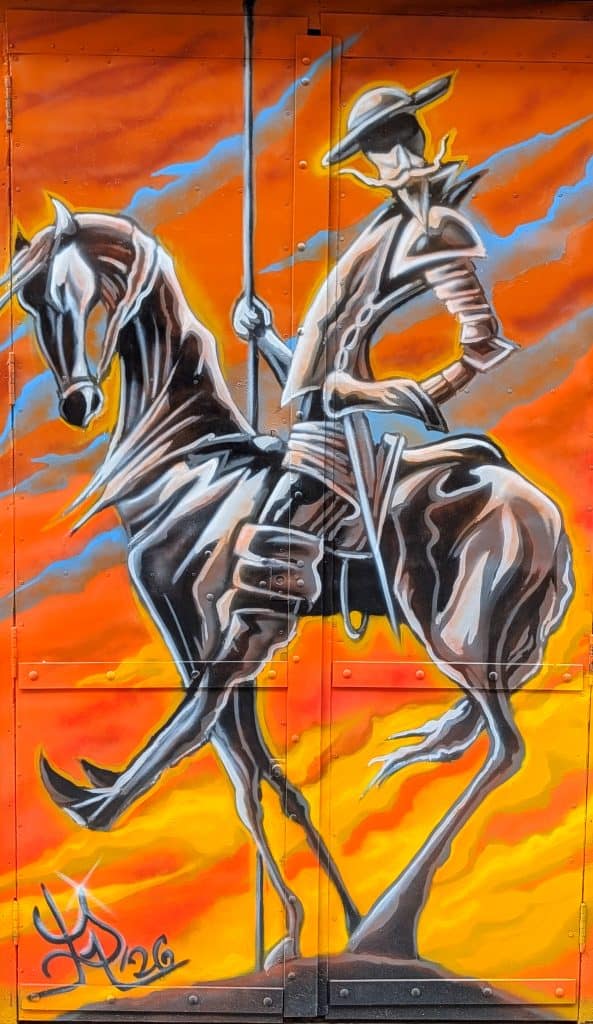
This was one of Alcalá’s two local holidays, tied to the Fiestas Patronales de los Santos Niños, the week-long festival honoring Justo and Pastor, two child saints the city claims as its own patrons, which the whole town had spent the previous days celebrating. Their own story, how two children came to be Alcalá’s patron saints in the first place, deserves a proper telling of its own, one I’ll save for when I write about the cathedral built in their memory. The city’s other local holiday falls in October, marking the anniversary of Miguel de Cervantes’s baptism here in Alcalá in 1547. Cervantes, the writer best known for Don Quixote, is this city’s most famous native son. That date kicks off Semana Cervantina, a week the old quarter spends turning itself into a Golden Age market. That one will get the fuller treatment once it happens again, well past what a passing mention here could give it.
Neither holiday is the kind of thing that gets announced, and I don’t think either is meant to be. A place takes on an obligation when it lets you move in: it houses you, it keeps your utilities running, it processes your paperwork and, eventually, it calls you a neighbor. But the reverse holds too, and it’s the half of the arrangement nobody hands you a document for. You’re the one who has to do the slow work of becoming part of the place, of letting its particular rhythms work their way into you instead of just living alongside them. Alcalá had already held up its end. We hadn’t yet held up ours. Not out of any failure on our part, just time not yet spent. It’s the kind of thing you already know once you belong somewhere, the way you know which stair in your own house creaks. You only know it because you’ve been there long enough for it to have settled into you without your noticing. We hadn’t been here long enough yet.
The Rhythm: What Spain Actually Does With Time
That was early August, our second week living here. Looking back on it now, from the other side of the month, I can see the washing machine for what it actually was: not an isolated inconvenience, but the first small proof of exactly what I’d just described, a pattern that would go on to define the entire month.
From where I stand, Spain doesn’t organize time the way I spent thirty years organizing it, as a resource to be used, and sometimes abused, a flat line meant to be filled end to end. It treats time more like a piece of music, one built on rests written into the score on purpose. A meal doesn’t have to end when the food does, not if the point of the meal was the people at the table all along. A day can be cut in two, deliberately, so that neither half has to be lived running on empty. Even a week has a weekend built into it, two days set apart from the other five, quieter than the rest without anyone having to announce it. And the year itself seems to pivot on one long stretch of silence: August, the kind of rest that changes the shape of everything played before and after it.
None of these rests are gaps in the music. They’re the reason it holds together at all. Underneath all four, I’ve come to think, sits the same quiet argument: that all of this was built around the human being at the center of it, both the self that needs to rest and the community that only holds together if it rests in step.
I want to say plainly, before going any further, what a month buys a person and what it doesn’t. It doesn’t make me any kind of authority on Spanish culture, and nothing that follows should be read as one. What it does buy is the beginning of a pattern, and enough humility, I hope, to write about that pattern as something I’m still learning rather than something I’ve already figured out. Read what follows as preliminary thoughts on something genuinely deep, a cultural inheritance I make no claim to having real access to, only the outside view of someone still learning to see it.
The Meal: What Sobremesa Refuses to Let Go
Sobremesa, the stretch of time at the table after a meal has technically ended, refuses to let a meal end on the clock’s terms at all. I’ve written elsewhere about what the word means and why I first fell for the idea of it before I’d ever lived it. What gave me the lived version was simply being here long enough to sit through it, repeatedly, in enough different settings that I stopped thinking of it as a single cultural custom and started thinking of it as a default setting Spain applies to eating in general.
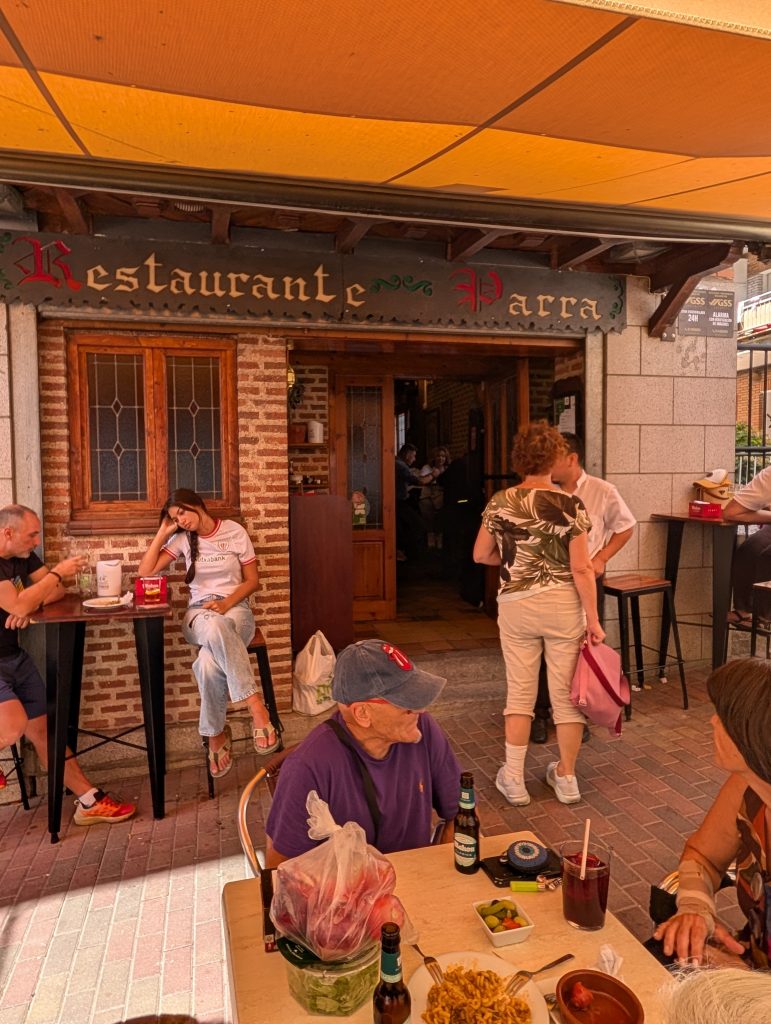
The clearest example came in Manzanares el Real, a small town at the foot of the Sierra de Guadarrama we visited toward the end of August. We sat down at Restaurante Parra, a place that’s been feeding that town since 1973, for the menú del día: a gazpacho andaluz, a rich codillo al horno cooked in the German style the region is known for, arroz con leche and tiramisu to finish, shared. We stayed at that table for something close to two hours. Nobody hovered. Nobody cleared plates the moment forks went down. The street outside stayed hushed the entire time, the mountain air cooler than anything we’d felt in weeks, and at no point did staying feel like we were taking up space we hadn’t earned. That’s the part that still catches me. In thirty years of American restaurants, lingering was something you apologized for. Here it was simply what the table was for.
Sobremesa has a cousin, too, one I hadn’t fully appreciated until a night out with a friend in Alcalá’s old quarter: tapear, the practice of moving from bar to bar across an evening, a drink and a few small plates at each stop, no destination in mind beyond the next place. It isn’t really about the food. It’s about staying in motion with someone you’d rather not stop talking to, letting the evening decide its own length instead of deciding it in advance. It’s the same refusal as sobremesa, worn differently, applied to an entire evening instead of a single table. We started that particular night around 8pm and didn’t head home until close to midnight, and at no point did it feel like we’d wasted the time getting there.
One restaurant we ate at had rigged a misting system over its outdoor tables, a fine, cooling spray drifting down every few minutes to keep the heat from cutting a long lunch short. I’d seen the trick before and dismissed it as a gimmick. Sitting under one, in no hurry to be anywhere else, I understood it as a kind of infrastructure: one more small mechanism built to protect an unhurried meal from the heat that would otherwise cut it short.
The Day: What the Siesta Actually Interrupts
If sobremesa refuses to let a meal end, siesta goes further still: it cuts a deliberate pause into the middle of the day. My instinct, formed by a life spent chasing constant availability, was to see those closed hours as theft. Time subtracted from an already short day, shutters coming down like a daily verdict against ambition. I don’t carry that instinct anymore, though I couldn’t tell you exactly when it left. I wrote about it while it was still raw, in My First Week in Alcalá: Paperwork With Better Views, if you want to see exactly how wrong I had it.
Part of what changed my mind was simply the heat. We arrived in the middle of one of Spain’s hottest summers on record, a third heat wave of the season bearing down before July had even finished, a major wildfire west of Madrid only recently under control. By early afternoon most days, the air outside stopped being air you moved through and turned into air you had to endure. Siesta, under those conditions, stopped looking like an indulgence and started looking like the only sane response available. The country isn’t closing out of laziness. Insisting on productivity straight through the hottest hours of the day isn’t discipline here, it’s a kind of self-harm.
We saw this most clearly on a day trip to Los Santos de la Humosa, a small town east of here, for the total solar eclipse in mid-August. We arrived at midday, the sun striking straight down with nothing to soften it, to find every shutter already down, no chairs set out, nothing changed for the eclipse at all. Survival came before performance here, the way it does every August afternoon. Not even the eclipse could talk this town out of protecting itself first. I wrote about the eclipse itself in A Total Eclipse Came to Los Santos de la Humosa. The Town Kept Its Own Time., if you’d like the fuller story.
The pause reaches past itself, too. Shops that close for it don’t simply reopen once it ends, they reopen deeper into the evening. Dinner doesn’t start until well after dark. A country that gives its middle hours over to rest doesn’t lose that time, it just moves everything the day still owes further down the clock. I’d already lived this without naming it. The night we spent moving bar to bar across Alcalá’s old quarter, the one I started around eight and didn’t wind down until close to midnight, wasn’t a late night by accident. It was the siesta, still working, hours after the shutters had gone back up.
By the second week of August, back home in Alcalá after a morning spent watching a procession for the city’s own patron saints wind down Calle Mayor, I caught the change I’d been circling for weeks finally happening. I didn’t decide to take the siesta that followed. I just found myself already in it, the way you notice you’ve fallen asleep only after it’s happened. It felt entirely different than it had two weeks earlier. Not a gap cut out of the day against my will, but something the day had simply made room for, the way a piece of music makes room for a rest between two phrases. The silence isn’t an absence of the music. It’s part of it.
The Weekend: What the Bells Still Mark
Sobremesa holds a rest inside a meal. Siesta holds a longer one inside a day. The weekend holds its own too, and it introduced itself to us in pieces, one day at a time.
Saturday came first, and it made itself known as a hard stop before I ever registered it as a mood. Returning a rental car that first weekend, we found the counter already closed for the day, an hour we hadn’t planned for. It felt like an isolated inconvenience until I started noticing everything else built the same way.
Weekdays here wake to a specific soundtrack before eight: delivery trucks working down Calle Mayor, hoses and brooms against stone, people moving with somewhere to be. On Saturday, all of it goes quiet, and what’s left moves slower, in smaller groups, toward nothing more urgent than a coffee with someone they like. The cafés and terraces still open, but plenty of businesses around them stay dark, and the energy across the old quarter turns lighter, more social, less transactional. Saturdays, it turns out, run on their own shortened clock, one weekdays never follow.
Sunday went further still, past slowing down and into an actual stop. Shops that had only eased through Saturday closed outright. Streets that filled by mid-morning any other day stayed empty long past noon, an extra layer of stillness stacked on top of the daily one siesta already provides. But it was sound, not silence, that made the day impossible to miss. Our first Sunday in Alcalá, bells started answering each other from every corner of the city, one parish overlapping the next before either had finished.
Since I’m not Christian, church bells don’t carry the same religious meaning for me that they do for devout Catholics. But I grew up hearing that exact sound throughout my childhood in France. It settled into me long before I had any say in what would stick. It’s stayed part of who I am, independent of whatever it was ever supposed to mean.
The flight had gotten us here. The border had stamped it. The paperwork already piling up made it official enough on paper. None of that had done what the bells did, lying there in an apartment we’d barely begun to unpack, still only half convinced any of this was real. The flight was a fact. The border was a fact. The bells went somewhere those facts couldn’t reach. For the first time since we’d landed, I wasn’t visiting Europe. I was home.
None of it is coincidence, I think: not the shortened Saturday clock, not the shuttered Sunday streets, not the bells that reached us before we’d even finished unpacking. It’s an echo of an older arrangement, one where a week wasn’t seven blank days lined up in a row. It circled back on itself instead, the same day returning each week to shape the six around it. That’s why Saturday eases rather than stopping outright, still shaped by the Sunday just ahead of it. Alcalá keeps that structure largely without noticing it keeps it, the way nobody notices their own accent until they leave the place that gave it to them.
The Year: August as the Pivot
A meal has its rest, a day has a longer one, a week builds toward a louder pause still. And then, holding all three inside it, a year has the longest rest of all, one that falls on a single month.
Friends and local contacts had known for a while we were coming. It was only once we sent word that we’d landed that the responses started arriving, and nearly all of them said some version of the same thing: we’ll catch up properly in September, once everyone’s back from vacation. This was stated flatly, not the vague deflection I’d grown used to back home, but the same tone you’d use mentioning that shops close for lunch. Nobody was avoiding us. September was simply when the country would be back. I already knew the shape of it: August as the month much of Europe eases off, businesses closing outright while people head toward wherever they spend their summers. What thirty years in the US had worn away was any real memory of just how completely a country can stop. Living through it again, that memory came back whole. It looked like this.
The washing machine wasn’t an isolated incident. Schools across the country stay closed through the whole of August, not just running on reduced hours but shut outright. Administrative offices thin out to whatever staff didn’t take the month off. Some restaurants, bars, and shops close their doors entirely and simply don’t reopen until September. Within our first week here, we learned that most of the staff who handle school placements and language enrollment were among them, gone until early September, an unsettling discovery given school starts that same month. Our landlord met us for ten rushed minutes the day we arrived before leaving on his own August vacation, apologizing the entire time for the pace, promising a proper visit once he was back. He wasn’t being unusual. He was doing what a very large share of the country does every August: closing up and stepping away.
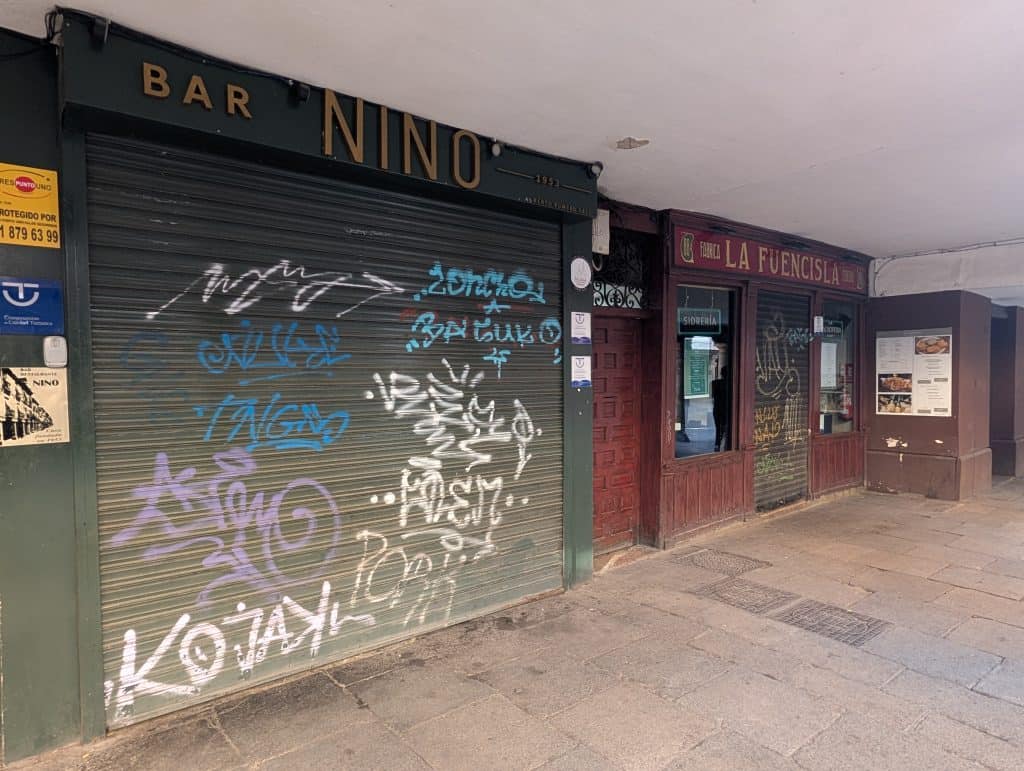
At first this reads as pure inconvenience. And in a few real cases it was exactly that: not knowing whether my wife’s son would have a school spot, weeks before term started, with the one office that could tell us anything already closed until September.
But living inside it long enough changed how I read the trade being made. When an entire town agrees to stop at the same time, missing out stops being a personal loss. Nobody is actually inconvenienced at all, because nobody was counting on August working like any other month to begin with. Nothing actually goes missing in the end. It just gets picked back up together, the whole town resuming on the same morning in September rather than each person drifting back to work on their own separate schedule.
A Cathedral in Time
What August actually does, though, more than close offices or delay deliveries, is turn the whole calculus around. For eleven months a year, time bends toward output: the next appointment, the next deadline, the next errand crossed off a list. August flips that. For a few weeks, the country organizes itself around a different question entirely, not what needs to get done, but what a person actually needs. Our landlord needed distance from work and time with his family. The staff at the enrollment office needed a life that existed somewhere outside a folder of forms. I needed, though I didn’t know it standing in that empty kitchen, to stop treating every closed door as an obstacle and start asking what it was protecting instead.
It reminded me, once I sat with it long enough, of a book I’d read years before any of this, Abraham Joshua Heschel’s The Sabbath. It’s a work of Jewish religious philosophy, not something I’d normally reach for while writing about a washing machine, but the core of it travels further than its theology does.
Heschel had his own image for it, one he wrote himself: “The Sabbaths are our great cathedrals.” The Sabbath, for anyone unfamiliar with the term, is the day of rest kept once a week in Jewish tradition, one day set fully apart from work, going back thousands of years. Heschel’s cathedral is built out of that single day, not stone. Take it on its own and it barely registers, one quiet Saturday, easy to lose inside a busy month. Repeat it every week for a year, though, and you have fifty-two of them, stacked one on top of the other. Repeat it for a lifetime, and what you have stops being a habit and starts becoming architecture, a structure a person can actually lean their weight against. Heschel called it a cathedral because that’s genuinely what it becomes: nothing you could point a camera at, but every bit as real, and every bit as load-bearing, as anything raised out of stone.
I don’t think you have to keep a Sabbath, or believe in what it was built to honor, to recognize the architecture underneath it. Strip the theology away, not in rejection of it, just to see what’s left standing without it. What remains is a claim I find myself believing more each year I’m alive: that a meaningful life depends on treating time itself, not just space, not just things, as worth building something out of.
Heschel built his cathedral around a single day, rooted in belief. Spain builds a recognizably similar structure into a meal, a day, a weekend, and a month, carried forward as custom and tradition rather than doctrine, so ordinary by now that nobody here stops to ask where it came from.
I think back to that kitchen now, waiting on a washing machine that wasn’t coming, mildly annoyed and not yet able to see past the annoyance. I understand now what I was actually looking at. Not a failure of the system. The system, working exactly as designed, quietly handing something back to someone, on a day the Fiestas Patronales de los Santos Niños had already claimed for something other than us.